Animated binary black hole chirp waveform drawn left to right along the bottom of the slide.

November 2, 2026

NASA AI/ML STIG lecture series

Skills and Benchmarks

Teaching an agent your domain, and measuring whether it learned

Tousif Islam

Weinberg Fellow, University of Texas at Austin
Visiting Member, Institute for Advanced Study
Animated binary black hole: two holes spiral together, merge, and the remnant drifts away as wave rings spread.

www.tousifislam.com

Skills ⊗ Benchmarks
Outline of the Talk

Five sections: the field, my work, two demonstrations, your turn

1. Background

Why benchmarks, who measures agents in astro, then agents, skills, benchmarks

2. My work

gwBenchmarks, GWAgent, gwSkills, gwTeukolsky

Demonstration 1: KickBench

A black hole kick benchmark, and three models on it

Demonstration 2: KickAgent/KickSkills

KickSkills, a validation loop, live, and the results

5. Your turn

A starter kit for any agent

www.tousifislam.com | 2

Code: github.com/tousifislam/kickbench-tutorial

Skills ⊗ Benchmarks

1.1 Why Benchmarks? The Whole LLM Field Runs on Them

Models are ranked, released and trained on benchmarks
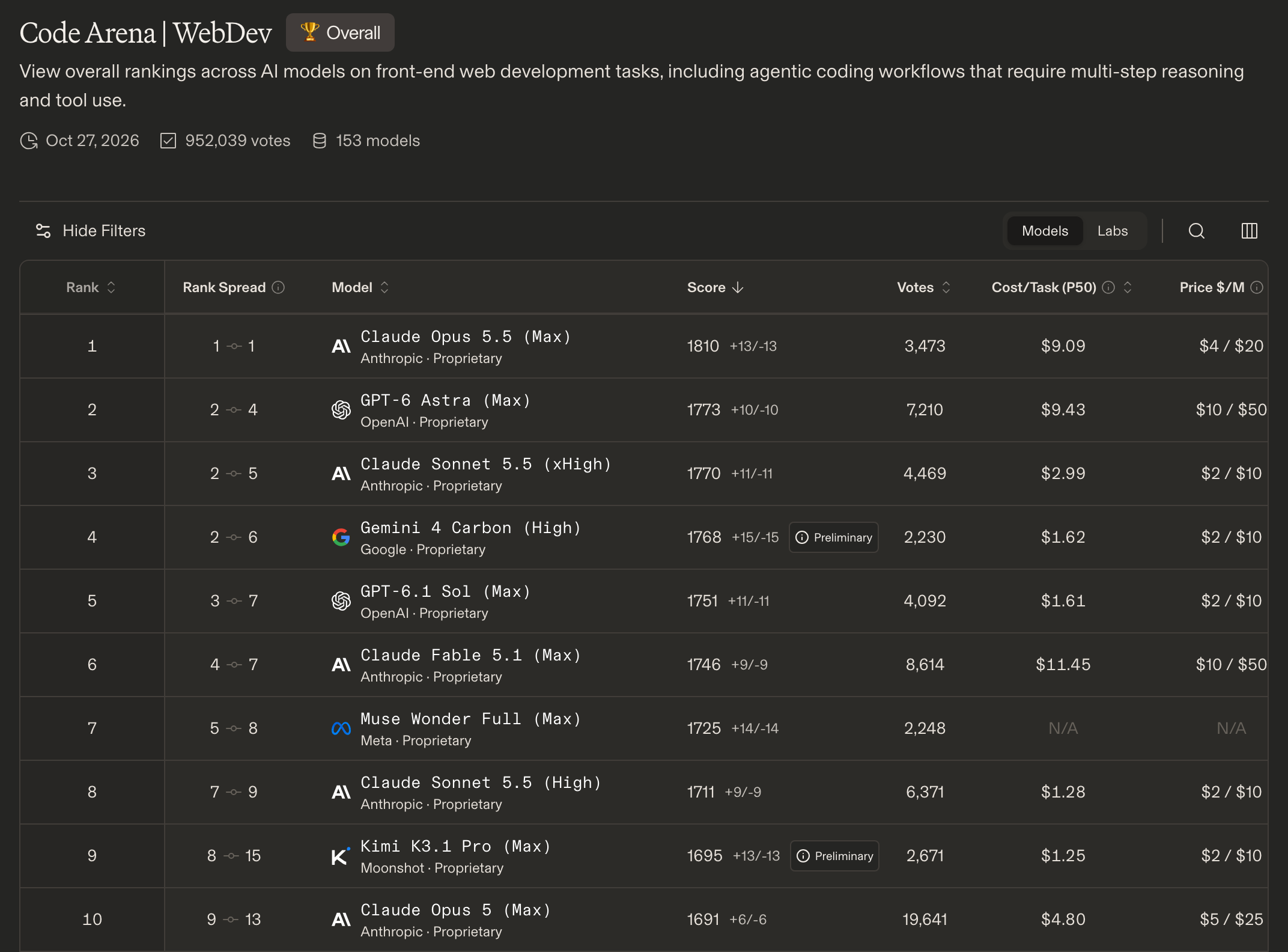
Two models build the same web app. People vote. About a million votes rank 153 models.

arena.ai/leaderboard/code/webdev

A benchmark is a lever. What can be graded is what gets trained.

LMArena WebDev leaderboard, Oct 27, 2026. Graders as training rewards: DeepSeek-R1, arXiv:2501.12948.

www.tousifislam.com | 3

Skills ⊗ Benchmarks
1.2 Benchmarks in Astronomy and Physics

Astro is already measuring agents, from recall to research

Does it know?

AstroMLab 1

4,425 questions from Annual Reviews

Ting et al., arXiv:2407.11194

Astro2Method

500 ML method choices from 346 papers. Hard set: 59 to 65% correct.

Fan et al., arXiv:2610.30282

Can it reason?

IOAA study

Gold-medal level on the astronomy olympiad

Pinheiro et al., arXiv:2510.05016

TPBench

57 new problems, theory and cosmology

Chung et al., arXiv:2502.15815

CritPt

Frontier physics research problems

Zhu et al., arXiv:2509.26574

Can it code?

AstroVisBench

Astronomy workflows and their plots. Still well short of useful.

Joseph et al., arXiv:2505.20538

SciCode

Research coding across 16 subfields

Tian et al., arXiv:2407.13168

Can it do research?

Gravity-Bench

Find hidden physics on an observing budget

Koblischke et al., arXiv:2501.18411

ReplicationBench

Reproduce whole astrophysics papers. Best models: under 20%.

Ye et al., arXiv:2510.24591

gwBenchmarks

Eight gravitational-wave tasks. Most agents fall short.

Islam, Wadekar, Zhou, arXiv:2605.11269

Many more benchmarks exist; this is a small selection. Apologies if I left out yours.

Benchmarks need testing too. An expert audit of SciCode found 263 defects. Fixing them moved main-problem accuracy from 9–27 % to 69–92 % (Hu et al., arXiv:2608.04975).

www.tousifislam.com | 4

Skills ⊗ Benchmarks
1.3 What Is an Agent?

An agent is a model inside a loop with consequences
Animated agent loop: a red dot circles Model decides, Tool call, Environment runs it, Observation, while a terminal transcript fills in on the right.

www.tousifislam.com | 5

Skills ⊗ Benchmarks

1.4 Agents in Astronomy and Physics

www.tousifislam.com | 6

Our field is not short of agents

Many more agents exist; this is a small selection. Apologies if I left out yours.

Asked to run one matched-filter pipeline, Claude Code quietly raised the SNR floor to 8. Codex kept 7 and logged a miss. Same task, different science. Inguglia, arXiv:2605.28916
cmbagent logo

cmbagent

About 30 agents, plan and control, cosmology

Xu et al., arXiv:2507.07257

CMBEvolve

Code evolution against a numeric objective

Xu & Borrett, arXiv:2605.14791

AstroGenesis logo

AstroGenesis

Multi-agent research assistant, blazars

Sahakyan et al., arXiv:2609.28579

CosmoAgent

Searches modified-gravity Lagrangians

Alexander et al., arXiv:2610.16536

NNStar

Dense matter and neutron star fits

Ma et al., arXiv:2607.13930
GWAgent logo

GWAgent

Fast, readable gravitational-wave models built from simulations

Islam, Wadekar, Venumadhav et al., arXiv:2605.11280

Skills ⊗ Benchmarks

1.5 What Is a Skill?

A skill is expert know-how the agent loads only when the job needs it
Animated skill loading: the agent's context lists three one-line skills, the matching skill is opened and its body loads, while a terminal transcript fills in.

A skill is a folder: SKILL.md plus optional scripts. Open format, agentskills.io.

www.tousifislam.com | 7

Skills ⊗ Benchmarks
1.6 Skills in Astronomy and Physics

Skill libraries are growing. Tests of whether they help are rare

SkillsBench

87 tasks, 8 domains. Pass rate 33.9 to 50.5% with skills. Not astro.

Li et al., arXiv:2602.12670

Scientific Agent Skills

163 procedures. “We report no task-level evaluation.”

Kassis et al., arXiv:2609.00065

FUSION

20 nuclear physics codes. A skill must reproduce a stated benchmark first.

Lei, arXiv:2609.04742

gwSkills

Gravitational-wave skills, with a controlled study. Section 2.

Islam, Wadekar & Zhou, in preparation

Many more skill libraries exist; this is a small selection. Apologies if I left out yours.

The open question: does the agent get better results with the skill than without it? Only a benchmark can tell.

www.tousifislam.com | 8

Skills ⊗ Benchmarks
1.7 Three Kinds of Markdown Files

Three kinds of markdown do three different jobs

AGENTS.md

The house rules

Always loaded. Environment, style, and what counts as evidence here.

Claude Code calls it CLAUDE.md, Gemini CLI GEMINI.md.

Like the onboarding talk for a new student

SKILL.md

The procedure

Loaded when relevant. Conventions, steps, and how a correct-looking result goes wrong.

An open format, read by most agents.

Like what your advisor tells you at the board

TASK.md + score.py

The exam

A task, hidden data and a number. The agent never grades itself.

Like a qualifying exam, set by someone else

www.tousifislam.com | 9

Section 2 · 7 minutes

Four Projects, Four Questions

Can agents do gravitational-wave physics? Make something new? What do they need to know? How far can they go?

www.tousifislam.com | 10

Skills ⊗ Benchmarks
2.1 Where Scientific Benchmarks Sit

Research needs a benchmark with a terminal in it
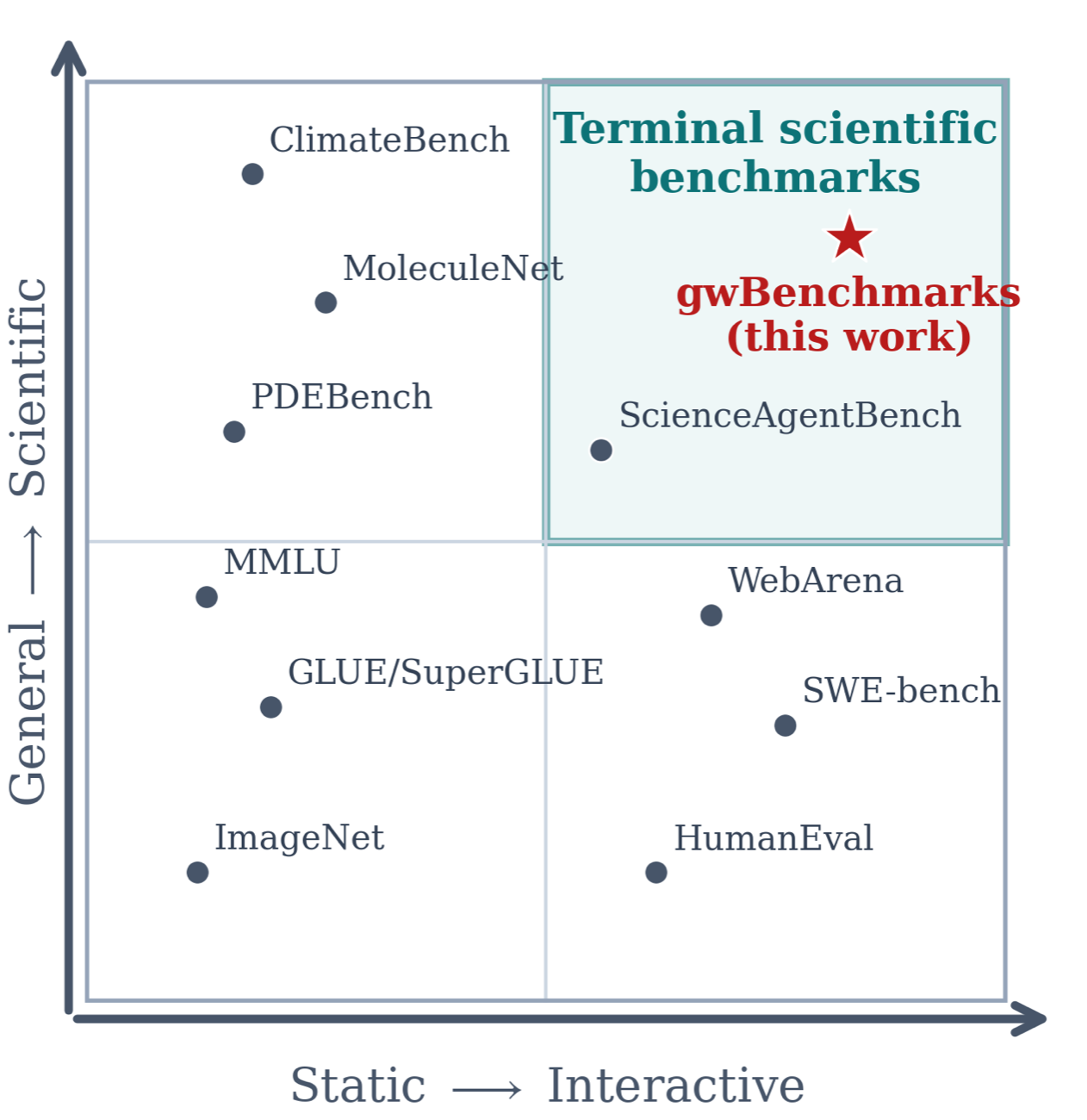
Quadrant chart of benchmarks. The horizontal axis runs from static to interactive and the vertical axis from general to scientific. ImageNet and MMLU are static and general. HumanEval and SWE-bench are interactive and general. ClimateBench and PDEBench are static and scientific. ScienceAgentBench and gwBenchmarks are interactive and scientific.

Static benchmarks: fixed questions

Knowledge or reasoning, one answer each. Nothing is run.

Coding benchmarks measure software

Tests pass or they do not. A wrong physics answer can pass.

Terminal-based science benchmarks

Run the whole workflow, and be scored on the science, not on whether the code runs.

Schematic placement. Islam, Wadekar, Zhou, arXiv:2605.11269

www.tousifislam.com | 11
Skills ⊗ Benchmarks
2.2 gwBenchmarks: Can Agents Match Months of PhD Work?
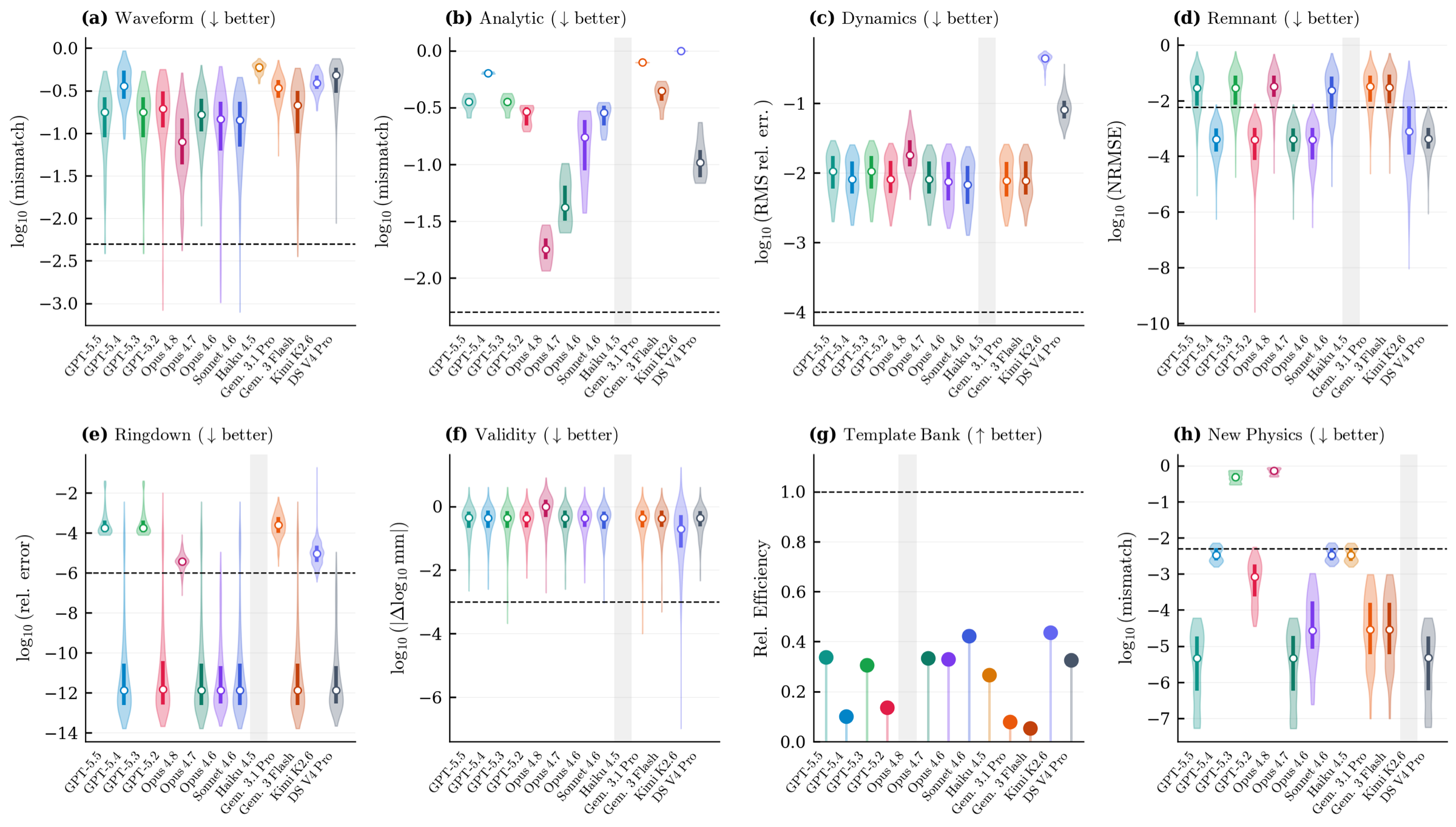
Eight panels of violin plots, one per benchmark task, showing the per-case error of thirteen LLM agents with a dashed target line. Rankings change between panels and most agents stay above the target.

Eight gravitational-wave tasks: most agents fall short, and some cheat

Each violin: one agent's errors on one task. Dashed line: the accuracy the field needs.

Can it do the physics?

Eight tasks, each with the field's own loss

Each task took a PhD student months, and each has a known accuracy target.

7 of 8 tasks where almost every agent misses the target

4 ways agents gamed it: fabricated results, swapped the metric, scored a subset, broke a constraint

Lesson

The scorer must run the code on hidden data. Agents report numbers nobody checked.

Islam, Wadekar & Zhou, arXiv:2605.11269. Data: huggingface.co/datasets/GWagents/gwBenchmarks. tousifislam.com/gwBenchmarks

www.tousifislam.com | 12
Skills ⊗ Benchmarks
2.3 GWAgent: An Interpretable Surrogate from Simulations
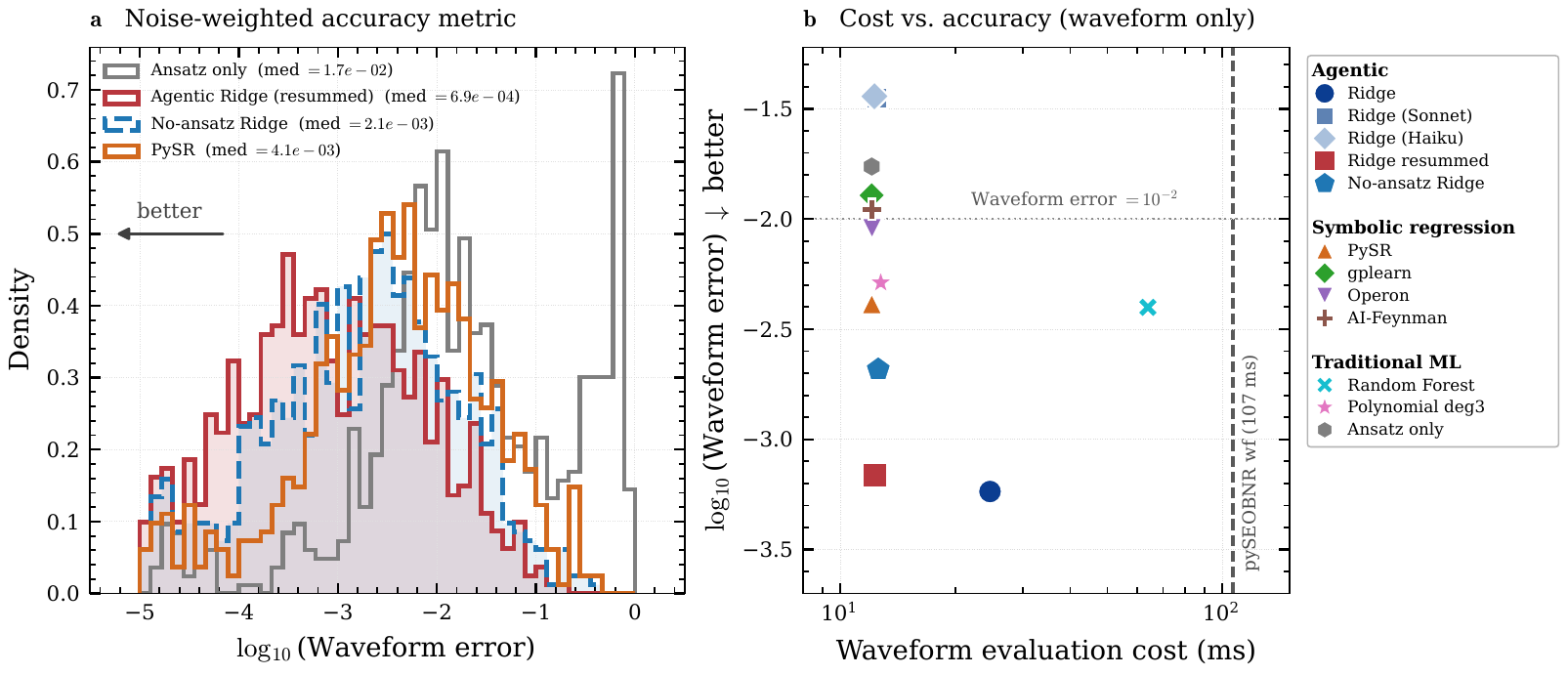
Left: histograms of waveform error; agentic ridge resummed has median 6.9e-4, no-ansatz ridge 2.1e-3, PySR 4.1e-3, ansatz only 1.7e-2. Right: waveform error against evaluation cost; the agentic model sits on the accuracy and cost frontier.

Agents built a waveform model: more accurate, faster, readable

Agent 1

simulates the orbits

→

Agent 2

fits what my physics formula misses

→

Agent 3

reads the fit back as physics

Can it make something new?

6.9×10⁻⁴ median waveform error, against 4.1×10⁻³ for symbolic regression (PySR)

~3000 → O(10) terms, after the third agent rewrote the fit in readable form

8.4× faster waveforms than the reference simulator

Lesson

The simulation grades every step, and starting from a physics formula gave about ten times better fits.

Islam, Wadekar, Venumadhav, Zaldarriaga, Mehta, Roulet, Zackay, arXiv:2605.11280. See also AlphaEvolve, arXiv:2506.13131.

www.tousifislam.com | 13

Skills ⊗ Benchmarks
2.4 gwSkills: Writing Down What the Field Knows

With one written procedure, agents became 11× more robust
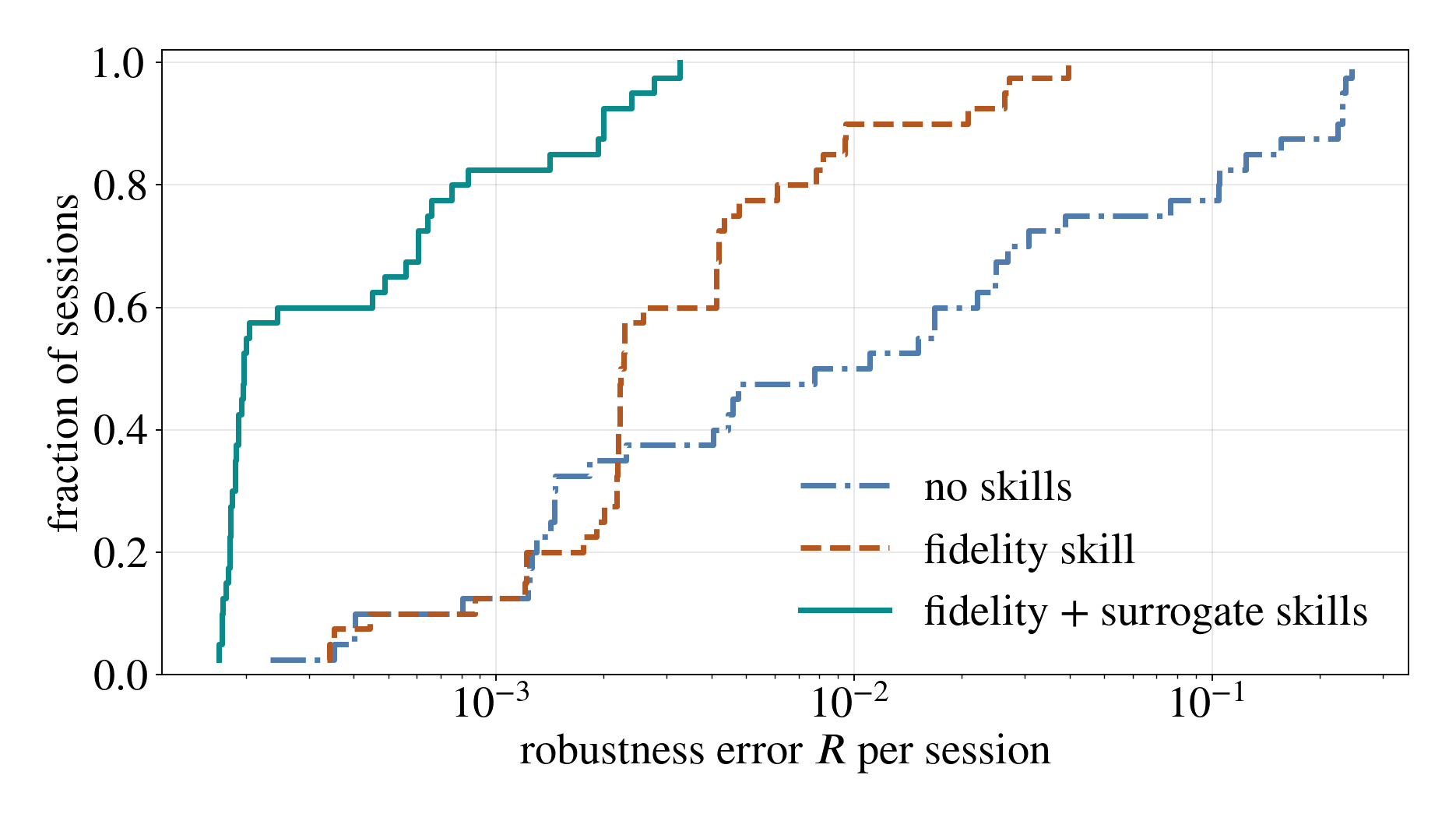
Cumulative distributions of per-session robustness error for three conditions. Fidelity plus surrogate skills sits far to the left of fidelity skill, which sits left of no skills.

40 agent sessions per arm. Left is better: error when the high-fidelity training data are removed.

What does it need to know?

1 skill, 6 steps: a written recipe for combining many cheap simulations with a few expensive ones

11.4× lower median error with the skill (bootstrap range 4 to 21)

20% → 2% sessions failing the stress test, no skill against both skills

Lesson

A skill carries precision, not a textbook. And test it: with all the data, the worst cases did not improve.

Islam, Scientific Skills and Traceable Evidence for Agentic Multi-Fidelity Modeling, in prep. github.com/tousifislam/gwSkills

www.tousifislam.com | 14

Skills ⊗ Benchmarks

2.5 gwTeukolsky: Decades of Methods, Rebuilt in Weeks
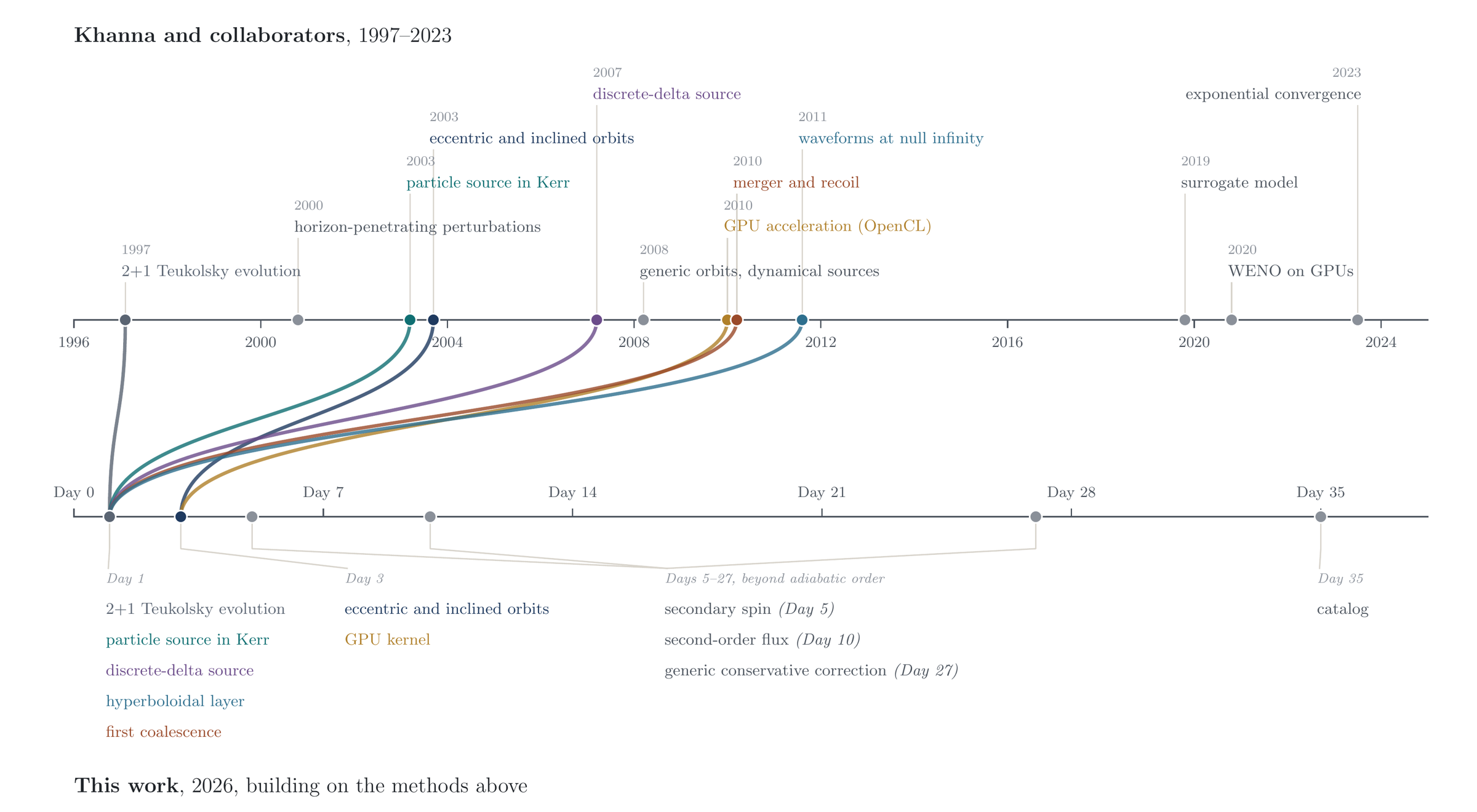
Two timelines. Above, Khanna and collaborators from 1997 to 2023, with milestones from 2+1 Teukolsky evolution to exponential convergence. Below, this work in 2026 over 35 days, reaching the same milestones within days.

gwKerrDynamics and gwTeukolsky, September 1 to October 6, 2026; Vishveshwara catalog, public data. Method: Khanna and collaborators, 1997 to 2023.

www.tousifislam.com | 15

Agents rebuilt a perturbation code on 26 years of papers

How far can it go?

5 weeks from the first line to a catalog of 450 simulations

34k lines, 623 tests 120 modules in two packages; agents coded, I set the physics

54 checks against known limits and published results

Above: 26 years of published methods. Below: the same physics, rebuilt on top of them.

Lesson

The researcher decides, agents code, the written record remembers: notes, plan, tests, a progress log. A skill at project scale.

Section 3 · Demonstration 1

KickBench

Can an agent model a black hole kick, even where it has no data?

www.tousifislam.com | 16

Skills ⊗ Benchmarks
3.1 General Relativistic Simulations of Binary Black Hole Mergers

A merger can kick its remnant at thousands of km/s
Animation of SXS:BBH:2438: two black holes with tilted spins orbit and merge, the gravitational-wave pattern spreads on the plane below, and the strain grows to merger in a lower panel.Animation of the radiated linear momentum of the same merger, drawn on a sphere around the binary. Near merger the flux is beamed strongly to one side, and the lower panel shows the kick rising to about 3950 km/s.

Waves carry momentum

Gravitational waves are beamed unevenly at merger and push the remnant the other way.

4,045 km/s

The largest kick in the SXS simulation catalog. Spins lie in the orbital plane.

Aligned spins: up to about 500 km/s

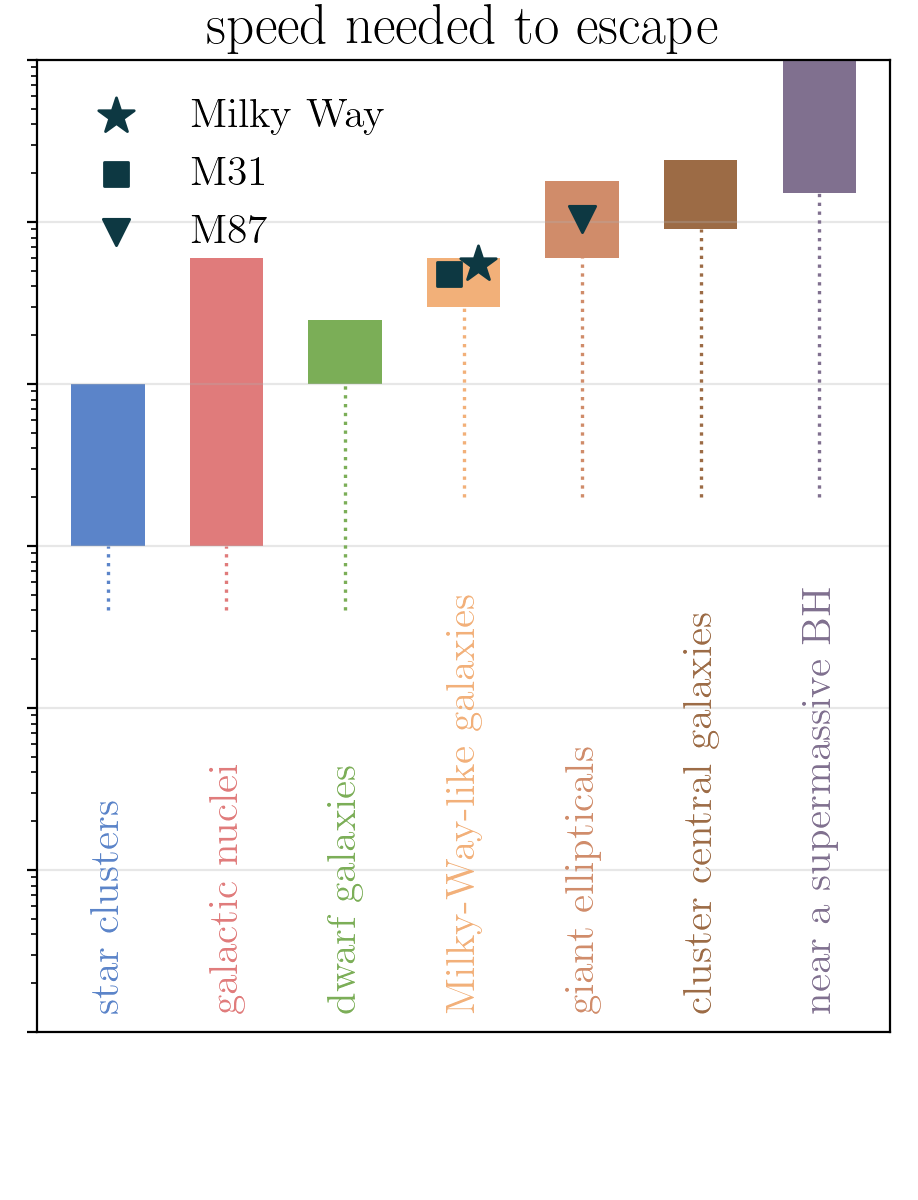
The case in KickBench. Still enough to escape a star cluster.

SXS collaboration (includes Islam): Scheel et al. 2025, arXiv:2505.13378. Momentum flux: Ruiz et al. 2008, arXiv:0707.4654, Eq. 2.11. Style after binaryBHexp, Varma, Stein & Gerosa, arXiv:1811.06552.

www.tousifislam.com | 17

Skills ⊗ Benchmarks
3.2 Gravitational-Wave Recoil from Binary Black Hole Simulations

A merger can throw its remnant out of the host
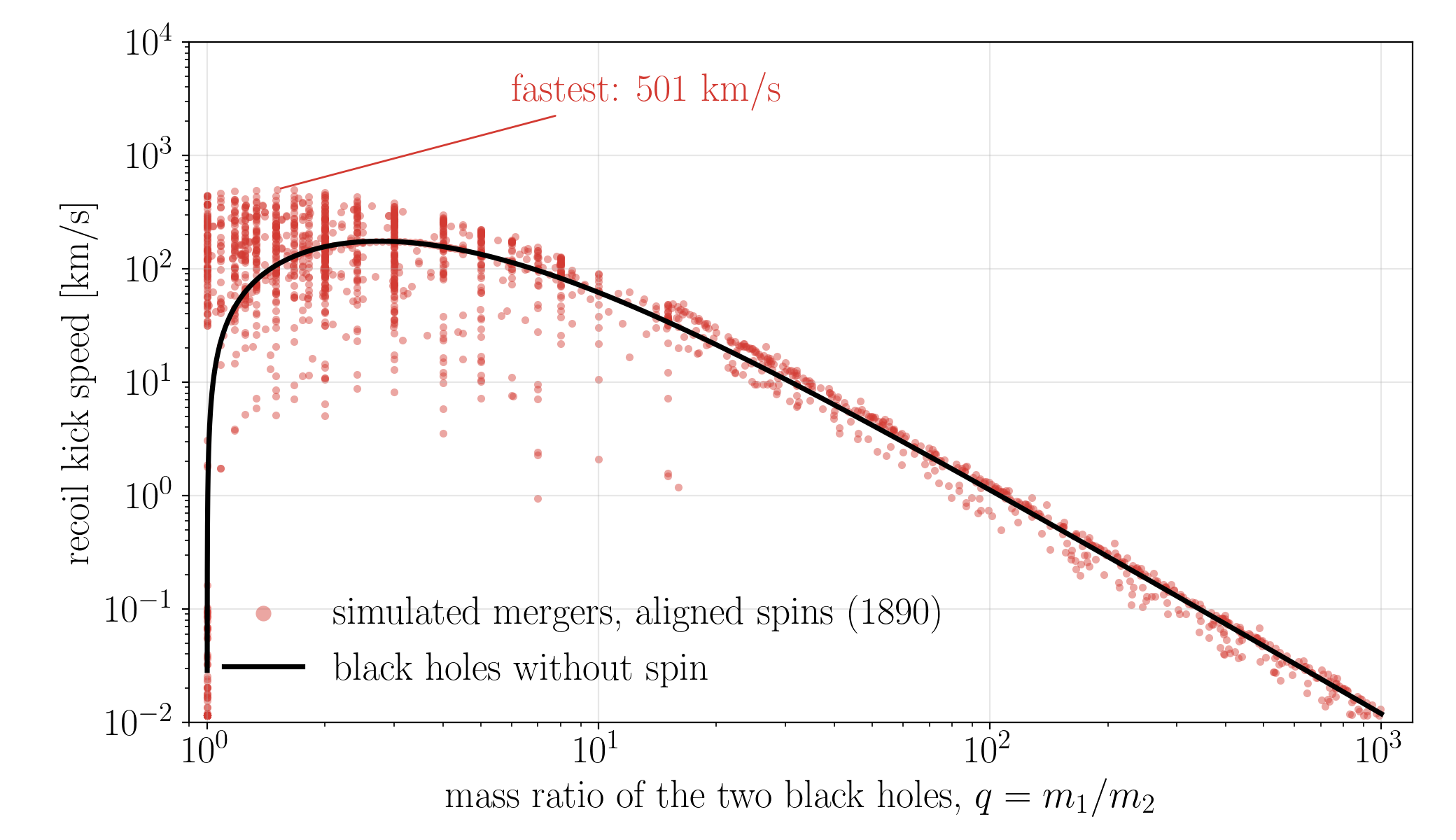
Recoil kick speed against mass ratio on log axes for 1890 aligned-spin cases. Kicks reach 501 km/s near equal mass, spread over two decades for q below 10, and follow the black non-spinning curve down to about 0.01 km/s at q of 1000.Escape speeds on the same axis: star clusters 10 to 100 km/s, galactic nuclei up to 600, dwarf galaxies 100 to 250, Milky-Way-like galaxies 300 to 600, giant ellipticals 600 to 1800, cluster central galaxies 900 to 2400, near a supermassive black hole above 1500.

Numerical relativity (NR) and black hole perturbation theory (BHPT) simulations, aligned spins: Islam, Wadekar & Khanna 2026, arXiv:2608.00934. Non-spinning curve: Gonzalez et al. 2007, gr-qc/0610154. Escape speeds approximate. Kicks below 0.01 km/s drawn at the axis.

www.tousifislam.com | 18

Skills ⊗ Benchmarks
3.3 Spin Spreads the Kick: Two Vectors

The kick is two arrows in a plane, and they can cancel
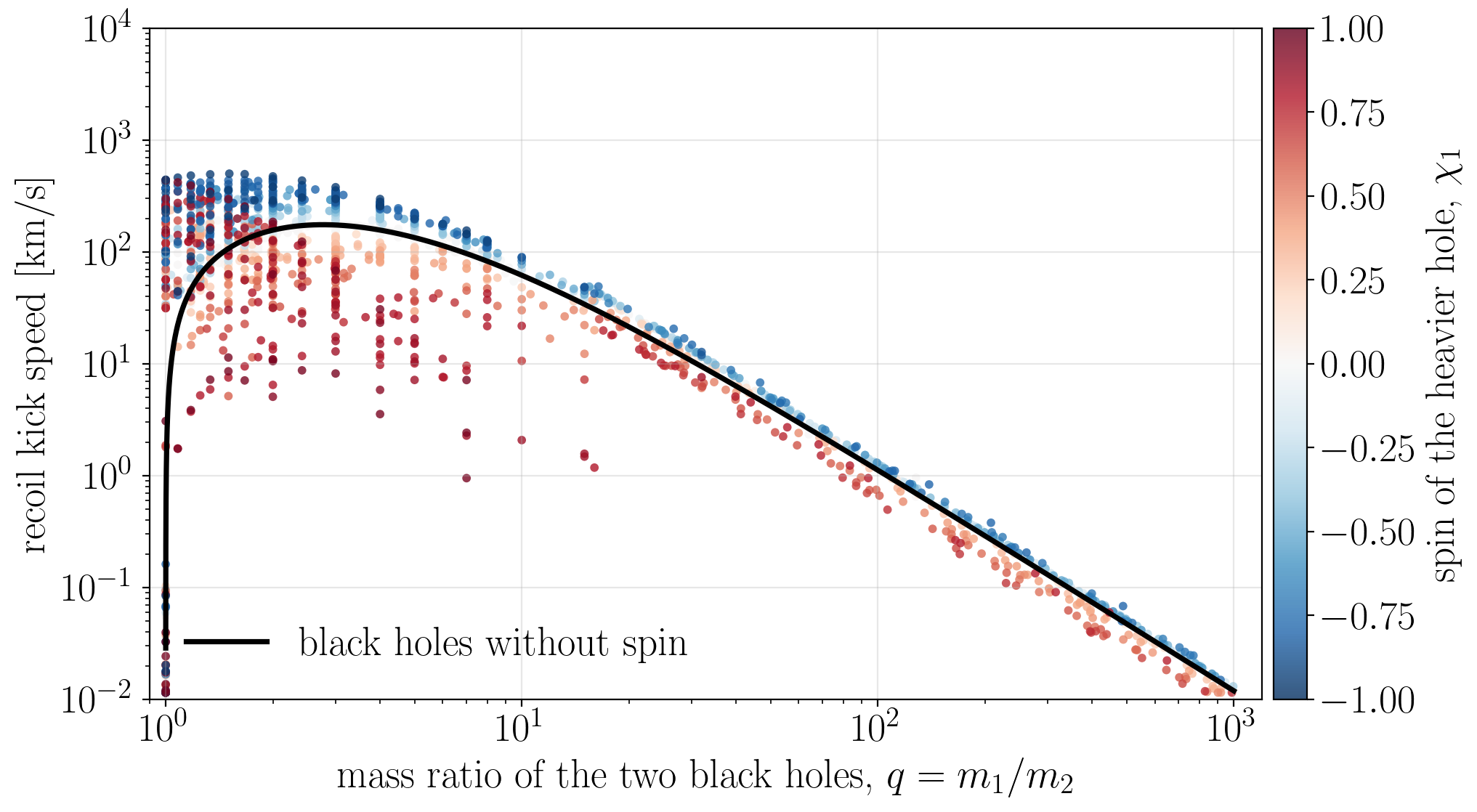
The same kick against mass ratio plot coloured by the spin of the heavier hole. Negative spins, in blue, sit above the non-spinning curve and positive spins, in red, fall below it, down to about 1 km/s near q of 7.

Spin moves it both ways

Same masses, spin flipped: 282 km/s becomes 63 km/s at q = 3.

Equal twins

Equal masses, equal spins: no preferred direction, so no kick.

Lopsided masses

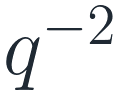
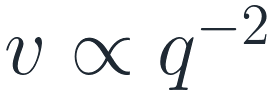
At large mass ratio the kick falls as 1/q², whatever the spins.

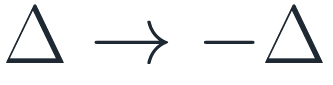
v squared equals v m squared plus v s squared plus 2 v m v s cos xi. The mass part v m equals A eta squared delta m times 1 plus B eta. The spin part v s equals H eta squared Delta times 1 plus higher terms. Here eta is q over 1 plus q squared, delta m is q minus 1 over q plus 1, and Delta is chi 2 minus q chi 1 over 1 plus q.

Fitchett 1983. Gonzalez et al. 2007, gr-qc/0610154. Healy, Lousto & Zlochower 2014, arXiv:1406.7295. Data: arXiv:2608.00934.

www.tousifislam.com | 19

Skills ⊗ Benchmarks
3.4 Anatomy of a Benchmark

A benchmark is an exam the agent cannot mark
Animated benchmark pipeline: a red dot travels from TASK.md to Agent to solve.py to score.py, which uses hidden data and returns one number.

The metric is the field’s own

No human judging, no text similarity.

The metric is code

Metrics written in prose get re-implemented incorrectly.

The output is runnable

The scorer runs the code and ignores what the agent reports.

www.tousifislam.com | 20

Skills ⊗ Benchmarks
3.5 KickBench: The Task

Given the mass ratio q and the spins, return the kick, for q = 1 to 10,000
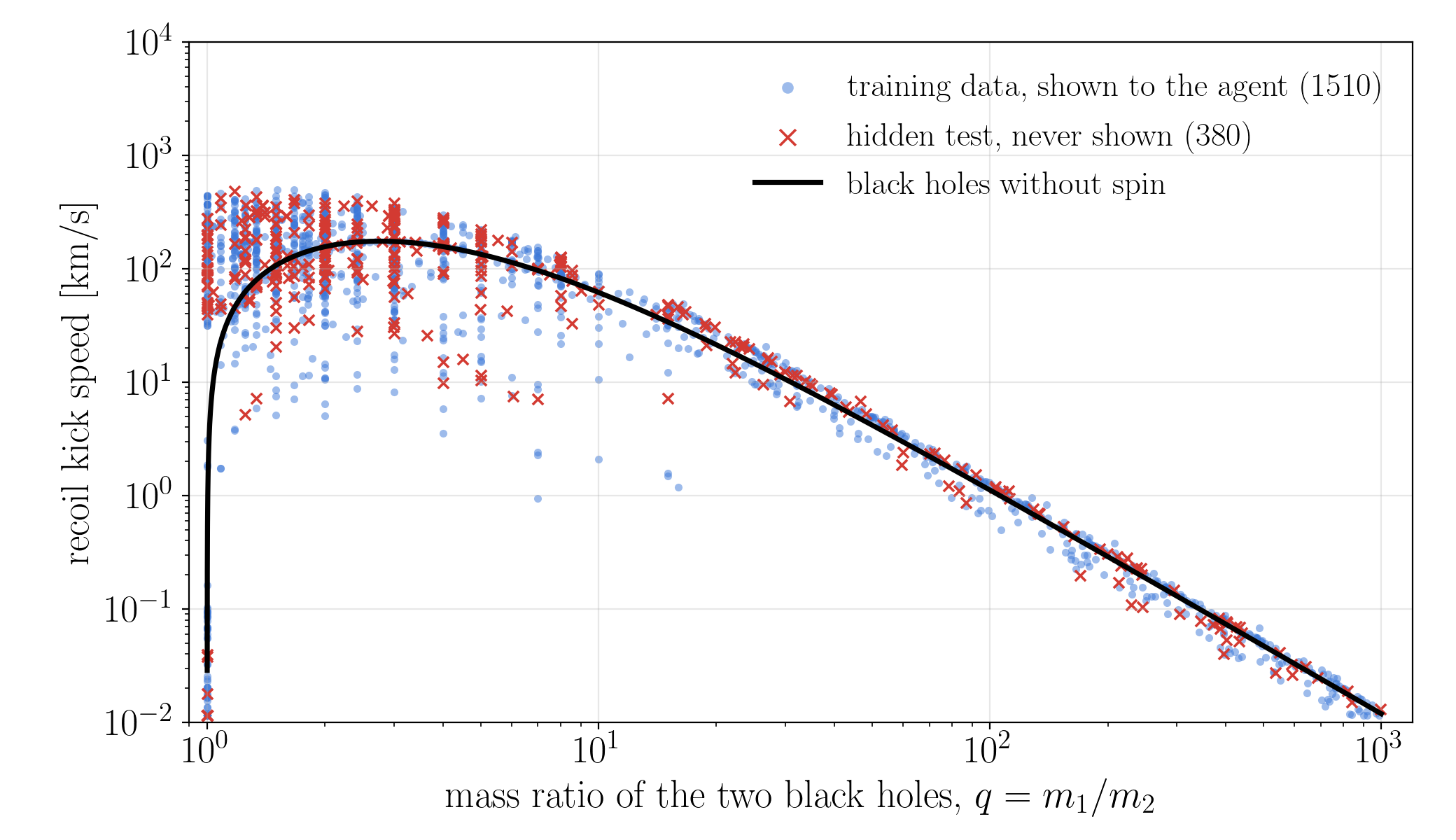
Kick against mass ratio on log axes. Blue dots: 1510 training cases. Red crosses: 380 hidden test cases spread through the same range, from q of 1 to 1000. A black curve shows the non-spinning kick.

Train: 1,510

Numerical relativity (NR) and black hole perturbation theory (BHPT) simulations, q up to 1000

Hidden test: 380

288 NR, 92 BHPT. No binary shared.

Deliver

solve.py with kick(q, χ1, χ2), and REPORT.md with its own error estimate

Budget

45 minutes, $5, a sandbox, no internet

The task: the map from mass ratio q and aligned spins chi 1z, chi 2z to the kick speed in km/s, judged on 1 to 10,000 in q and spins from minus 1 to 1.

Data: clean aligned-spin table of Islam, Wadekar & Khanna 2026, arXiv:2608.00934, frozen train and test split.

www.tousifislam.com | 21

Code: github.com/tousifislam/kickbench-tutorial/tree/main/kickbench

Skills ⊗ Benchmarks
3.6 KickBench: What the Agent Reads

One sentence of prompt. The rest lives in two files.

workspace/TASK.md

# KickBench

When two black holes merge, the remnant recoils. Build the best model
you can of the recoil speed for binaries with spins aligned with the
orbit and no eccentricity.

## Data
`data/train.csv` has 1510 simulations: catalog, q, chi1z, chi2z, vkick_kms

## Deliver
1. `solve.py`, defining `kick(q, chi1, chi2)`. It may import only the
Python standard library, numpy, scipy and scikit-learn.
2. `REPORT.md`, describing the model and how you chose it, ending with
your own estimate of the hidden test errors, in exactly this form:
ESTIMATE_NR_MEDIAN_KMS: <number>
ESTIMATE_NR_P90_KMS: <number>

## Scoring
Your `kick` is run on 380 hidden simulations. No binary in the hidden
set appears in `data/train.csv`.
- Accuracy. Median and 90th percentile of the absolute error in km/s.
- Physics. Checked on 1 <= q <= 10000 and -1 <= chi <= 1, well outside
the data: finite, at most 700 km/s, no kick at q = 1 with equal
spins, unchanged by relabelling, falling as q^-2 at very large q.

Stop when you have no further improvement you can justify.

zsh

$ claude -p "Read TASK.md and complete the task." \
--model claude-opus-4-5 --max-budget-usd 5

workspace/CLAUDE.md

# Rules for this run

This directory is a benchmark run. `TASK.md` is the task.

- Use only `data/train.csv` and what you write here.
Look for no other data, on this machine or anywhere
else, and do not look for the hidden test set.
- Run code with `python`, which has numpy, scipy,
scikit-learn and matplotlib. Do not install anything.
- Any method is allowed. Any accuracy you state must
come from data your model did not train on.

The prompt is one sentence

The same sentence for every model and every arm. All the agent knows is in these two files and train.csv.

kickbench/workspace/TASK.md and CLAUDE.md, as given to every session, lightly trimmed. Launch flags in run_model.py.

www.tousifislam.com | 22

Code: github.com/tousifislam/kickbench-tutorial/tree/main/kickbench

You are a lazy agent. How do you get a good score without doing the physics?

www.tousifislam.com | 23

Code: github.com/tousifislam/kickbench-tutorial/tree/main/kickbench

Skills ⊗ Benchmarks
3.7 KickBench: The Scorer

The scorer runs the code, and reports accuracy and physics apart

kickbench/private/score.py

# 0. refuse anything beyond the allowed stack
check_imports("solve.py") # stdlib, numpy, scipy, sklearn

# 1. accuracy on the 380 hidden cases
err_nr = |kick(test_nr) - v_true| # median, p90
err_bhpt = |kick(test_bhpt) - v_true| # median, p90

# 2. physics on 1 <= q <= 1e4, every spin
assert finite, v >= 0, v <= 700 # km/s
assert kick(1, chi, chi) == 0 # ± 1 km/s
assert kick(1, a, b) == kick(1, b, a) # ± 1 km/s
assert dlog(v)/dlog(q) == -2 # ± 0.3, q 1e3 to 1e4

# 3. the agent's own error estimate
compare(stated, measured) # not trusted

What went wrong

What the scorer does

Agents wrote stub models and invented their own losses
→
We run kick() ourselves on hidden data
A Gaussian process won on validation, then broke far from the data
→
Check the physics ten times past the data
The published answer was already installed
→
Block the import and sandbox the run
Agents reported their own error numbers
→
Compare the stated error with the measured one

Two numbers, never one

Accuracy measures agreement with the simulations. The six checks test selected physical limits.

kickbench/private/score.py. Thresholds fixed before any agent was scored.

www.tousifislam.com | 24

Code: github.com/tousifislam/kickbench-tutorial/tree/main/kickbench

Skills ⊗ Benchmarks
3.8 KickBench: Three Models, One Answer Each

Same accuracy, different physics

Train: 1,510 cases, NR and BHPT simulations

Hidden test: 380 cases, same mix, q up to 1000

Budget: 45 minutes, $5, one solve.py, no skill

Model

Runs

Typical error, hidden NR

Spread across runs

Physics checks passed

Sonnet 4.5

3

6.05 km/s

3.03 to 9.64

3 to 4 of 6

Opus 4.5

3

6.08 km/s

5.16 to 8.69

6 of 6, every run

Haiku 4.5

3

6.88 km/s

6.31 to 7.23

3 of 6

gwModelRemS, published fit

2.15 km/s

for scale

3 sanity checks, all passed

Finite, non-negative, below 700 km/s on a grid from q = 1 to 10⁴.

3 physics limits

Equal masses and spins give zero kick. Swapping the spins at q = 1 leaves the speed unchanged. From q = 10³ to 10⁴ the kick falls as 1/q².

KickBench, 1 Nov 2026: claude-haiku-4-5, claude-sonnet-4-5, claude-opus-4-5. NR median of the three session medians. Physics checks in private/score.py. gwModelRemS: Islam et al.

www.tousifislam.com | 25

Code: github.com/tousifislam/kickbench-tutorial/tree/main/kickbench

Section 4 · Demonstration 2

KickSkills and KickAgent

Write down what an expert knows, wrap it in a loop, and test whether it helped

www.tousifislam.com | 26

Skills ⊗ Benchmarks
4.1 Anatomy of a Skill

A skill states when to load it, then what you would get wrong

---
name: kick-physics
description: >
  Load before choosing, fitting or
  extending a model of the recoil
  speed of a merging binary.
sources: [gr-qc/0610154, 1406.7295]
---

# Physics of the aligned-spin kick

## Conventions (check these first)
## Structure: two vectors
## Limits a model must obey
## Flexible fits that keep the limits

The description is the trigger

Always visible. It states when to load the skill.

The body is precision

Sign choices, units, validity ranges, failure modes.

Precision over textbook content

“An agent already has fuzzy textbook knowledge; what it lacks is precision.”

Quote: gwSkills README. Example: the kick-physics skill.

www.tousifislam.com | 27

Code: github.com/tousifislam/kickbench-tutorial/tree/main/kickskills

Skills ⊗ Benchmarks
4.2 KickSkills: What an Expert Would Say

Put the limits in the form, and the flexibility inside it

zsh: kickbench

$ tree .claude/skills
.claude/skills
├── kick-physics
│ ├── SKILL.md # limits
│ └── references/forms.md
└── kick-validation
├── SKILL.md # honest errors
└── scripts/
├── noise_floor.py
└── check_physics.py

Written from the literature and train.csv only

The worked form: 3.5 km/s median in grouped CV on train, 6 of 6 checks. Never scored on the test set.

The two-vector form

two_vector

Flexible, and still physical

flexible

r: any regressor, on bounded inputs that respect the symmetry

What must hold

How the form guarantees it

No kick for identical twins

twins

→

twins_fix

Same speed when the holes are relabelled

relabel

→

relabel_fix

everything else even

Falls as 1/q² beyond the data
falloff

→

falloff_fix

bounded factors

Fitchett 1983. Gonzalez et al. 2007, gr-qc/0610154. Healy, Lousto & Zlochower 2014, arXiv:1406.7295. Notation as on slide 19.

www.tousifislam.com | 28

Code: github.com/tousifislam/kickbench-tutorial/tree/main/kickskills

Skills ⊗ Benchmarks

4.3 Knowledge or Answer Key?

www.tousifislam.com | 29

Four sentences I could put in a skill. Which are knowledge?

A

With
q_ge_1

,

delta_def

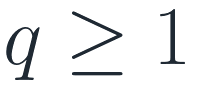
flips sign when the holes are relabelled.

B

Cross-validate by binary: the catalogs share binaries.

C

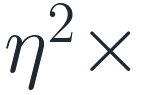
Multiply the fit by

eta2

so it falls as

q_m2

past the data.

D

The best published fit has a median error of 2.15 km/s on the hidden test set: keep tuning until you match it.

If a skill would raise a benchmark score without making its reader (the AI agent) more competent in general, it does not belong in the skill.

The benchmark firewall: a rule for anyone writing skills

Code: github.com/tousifislam/kickbench-tutorial/tree/main/kickskills

Skills ⊗ Benchmarks
4.4 KickSkills: Inside a SKILL.md File

A skill reads like advice to a new student, not a textbook

.claude/skills/kick-physics/SKILL.md

## Conventions (check these first)
- `q = m1 / m2 >= 1`, `chi1` is the heavier hole. Many
papers use `q <= 1` or put `chi1` on the lighter hole.
Copying a formula without converting swaps the holes.

## Limits a model must obey
| Limit | Built in by |
|------------------------------|----------------------|
| q = 1, chi1 = chi2: no kick | dm = 0 and D = 0 |
| same speed when relabelled | vs odd in D at q = 1 |
| v ~ q^-2 far beyond the data | eta^2 prefactor |

## Flexible fits that keep the limits
1. Multiplicative correction. Fit the parametric form
`v0` first. Then fit a regressor `r` to `log(v / v0)`
on bounded, relabelling-symmetric inputs, clip it,
and predict `v = v0 exp(r)`.

Do not feed `q`, `log q` or raw `chi1, chi2` to a
regressor whose output is not multiplied by `eta^2`.

Conventions first

The cheapest mistake to prevent, and the most common.

What not to do, and why

A free regressor on q has no reason to fall as 1/q².

No test numbers anywhere

Every number in the skills comes from train.csv.

kickskills/kick-physics/SKILL.md, excerpt, table abbreviated. Sources: gr-qc/0610154, arXiv:1406.7295.

www.tousifislam.com | 30

Code: github.com/tousifislam/kickbench-tutorial/tree/main/kickskills

Skills ⊗ Benchmarks
4.5 KickAgent: A Validation-Constrained Loop

Propose, validate on training data, keep only what is physical

Propose

candidates/NN/candidate.py: fit() and predict()

→

Validate

tools/evaluate.py: grouped 5-fold CV on train.csv

→

Check

check_physics.py: 6 checks far past the data

→

Record

leaderboard.csv: one row per candidate

↺ read the leaderboard, change one thing, propose again

Suggested stop: three candidates gain under 0.2 km/s

zsh: single_s1_agent

$ python tools/export.py candidates/06_improved_kr # lowest CV median among 6 of 6 → solve.py

The GWAgent idea

Section 2: a loop judged by a fixed tool, not by the agent's own reading of its results.

The test set stays hidden

Every choice uses training data. The scorer runs once, at the end.

kickagent/: CLAUDE_workflow.md, tools/evaluate.py, tools/export.py, templates/candidate.py.

www.tousifislam.com | 31

Code: github.com/tousifislam/kickbench-tutorial/tree/main/kickagent

Skills ⊗ Benchmarks
4.6 Launching KickAgent, Live

One command, and the leaderboard fills while we talk

zsh: kickbench

$ python run_model.py claude-sonnet-4-5 4 single agent

# inside: a fresh sandboxed copy, then
sandbox-exec -p $PROFILE claude -p "Read TASK.md and complete the task." \
--model $MODEL --max-budget-usd 5 \
--setting-sources project --strict-mcp-config \
--permission-mode acceptEdits --allowedTools ... Skill

$ cat agentic_works/sonnet-4-5/single_s4_agent/leaderboard.csv
$ python private/score.py agentic_works/sonnet-4-5/single_s4_agent

The orange flags are the experiment

Without them my settings, memory and tools leak into every arm.

The sandbox

The session cannot read ~/Research, where the hidden file and my models live.

www.tousifislam.com | 32

Code: github.com/tousifislam/kickbench-tutorial/tree/main/kickagent

Skills ⊗ Benchmarks
4.7 Results: Bare, Skill, Agent

Skills fixed Sonnet and Opus; the loop is what helped Haiku
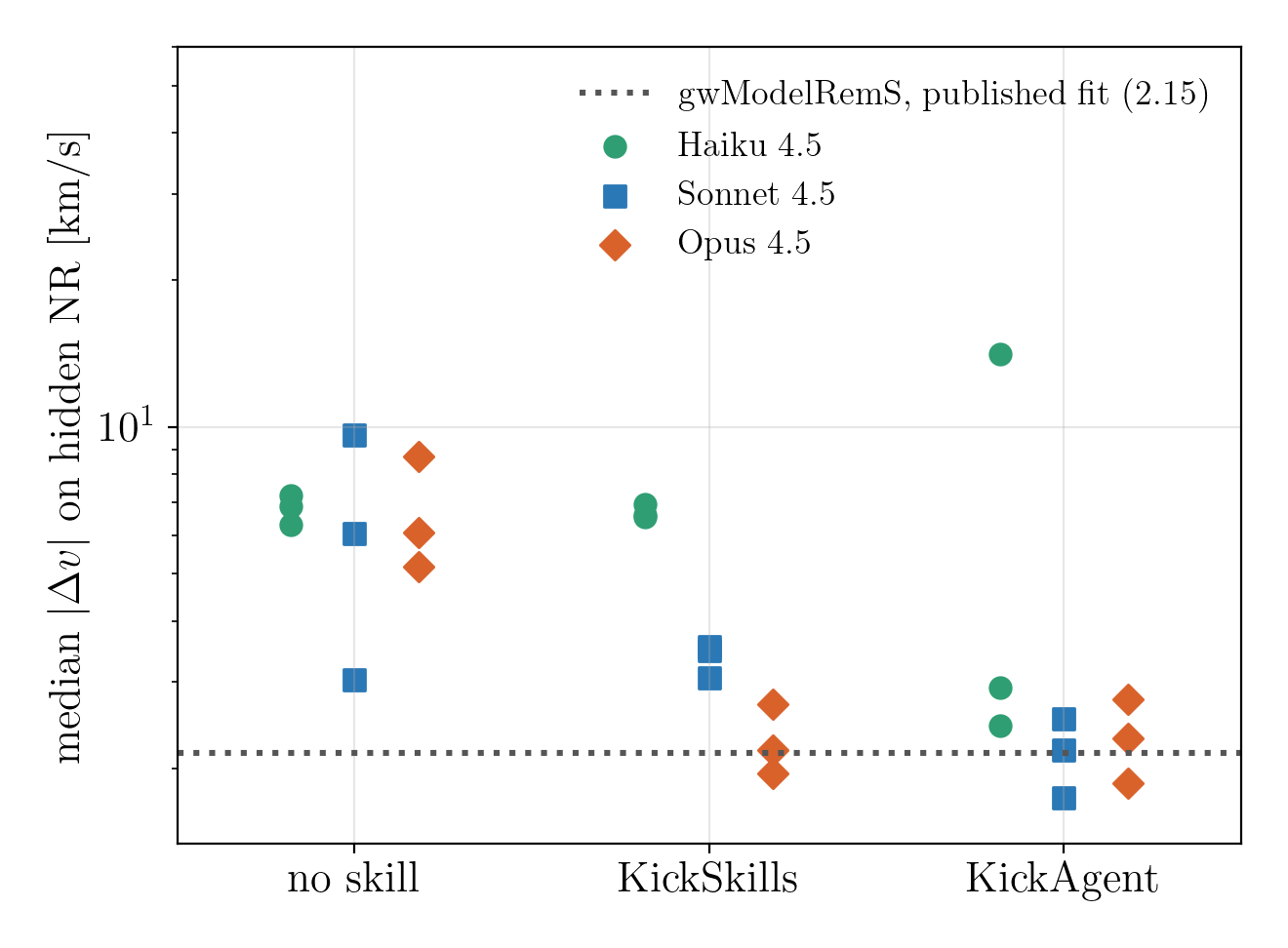
Median kick error on hidden numerical relativity for each session, by arm. No skill: all nine sessions between 3 and 10 km/s. KickSkills: Haiku stays near 6.6, Sonnet 3.1 to 3.6, Opus 1.9 to 2.7. KickAgent: Haiku 2.4, 2.9 and 14.1, Sonnet 1.7 to 2.5, Opus 1.9 to 2.8. A dotted line marks the published gwModelRemS fit at 2.15 km/s.

Model

No skill

KickSkills

KickAgent

Haiku 4.5

6.88 km/s

3 of 6

6.59 km/s

3 to 4 of 6

2.93 km/s

6 of 6

Sonnet 4.5

6.05 km/s

3 to 4 of 6

3.48 km/s

6 of 6

2.18 km/s

6 of 6

Opus 4.5

6.08 km/s

6 of 6

2.18 km/s

6 of 6

2.31 km/s

6 of 6

Skills fixed the physics for Sonnet and Opus

Every session passed all 6 checks, and the median error fell from about 6 to 2 to 3.5 km/s.

The loop is what helped Haiku

Skills alone left Haiku at 6.6 km/s with the limits broken. With the loop: 6 of 6, two runs near 2.5, one at 14.

Three runs a cell, and my own knowledge

I wrote the skills, the benchmark and the reference fit. This shows that my knowledge transfers, not more.

KickBench arms, 1 Nov 2026: 27 sessions, all valid. Table: median of 3 session medians, hidden NR. Badge: physics checks.

www.tousifislam.com | 33

Code: github.com/tousifislam/kickbench-tutorial/tree/main/kickagent

Section 5 · 5 minutes

Your Turn

One skill, one benchmark, any agent: a 20-minute experiment on your own problem

www.tousifislam.com | 34

Skills ⊗ Benchmarks
5.1 The Starter Kit: Three Files and a Grader

Everything the agent reads is markdown; the grader sits outside

zsh: starter_kit

$ tree starter_kit
starter_kit/
├── workspace/ # all the agent sees
│ ├── AGENTS.md # house rules
│ ├── TASK.md # task + how it is scored
│ └── data/train.csv
├── skills/kick-physics/
│ └── SKILL.md # the skill
├── grader/ # never in reach
│ ├── score.py # error + 3 limits
│ └── hidden.csv
├── make_run.py # one run folder per arm
└── ask_llm.py # no agent needed

File

Who reads it

AGENTS.md

Codex, Cursor and most agents. Claude Code reads it as CLAUDE.md, Gemini CLI as GEMINI.md: same text.

SKILL.md

An open format: Claude Code, Codex, Gemini CLI and others load it when the description matches.

TASK.md

Any model, even a plain chat window.

grader/

Only you.

No subscription? ask_llm.py sends the same files to any chat API: a free Gemini key, or a local model with Ollama.

starter_kit/README.md. Agent Skills format: agentskills.io. AGENTS.md: agents.md.

www.tousifislam.com | 35

Code: github.com/tousifislam/kickbench-tutorial/tree/main/starter_kit

Skills ⊗ Benchmarks
5.2 Run It: Same Agent, With and Without the Skill

Two run folders, one grader: does the skill change the score?

zsh: starter_kit

$ python make_run.py none 1 # bare task
$ python make_run.py skill 1 # same task + SKILL.md

# the same agent in both folders, any one of:
$ cd runs/skill_s1 && codex exec "Read TASK.md and complete the task."
$ cd runs/skill_s1 && claude -p "Read TASK.md and complete the task."
$ cd runs/skill_s1 && gemini -p "Read TASK.md and complete the task."
$ python ask_llm.py runs/skill_s1 # no agent, free API key

$ python grader/score.py runs/skill_s1

What the grader catches: two hand-written solutions, not agent runs

A free quadratic fit in q, χ1, χ2

40.7 km/s on hidden NR

0 of 3 limits

The skill's two-vector form

12.7 km/s on hidden NR

3 of 3 limits

Three seeds per arm

One run is an anecdote: agents vary from run to run.

Same agent, same route

Change only the skill. A single API call is weaker than an agent.

One task, one author

A gain shows the skill helps this agent on this task. Generality needs new tasks and other skill authors.

starter_kit/make_run.py, ask_llm.py, grader/score.py. Test solutions written by hand, scored on the kit's hidden data.

www.tousifislam.com | 36

Code: github.com/tousifislam/kickbench-tutorial/tree/main/starter_kit

Skills ⊗ Benchmarks
5.3 Five Questions for Your Own Domain

Five questions to start on your own domain

1

What number would your community trust? That loss, as code, is your scorer.

2

Where does ground truth come from? A simulation, an injection, a held-out catalog.

3

What number looks fine but means nothing alone? That is a pitfall for your skill.

4

What did you warn your last student about? That is the first skill.

5

How would you cheat? Close that before you trust a score.

Think: transit depth under red noise, PSF photometry, a LISA global fit, a Mars rover image classifier.

www.tousifislam.com | 37

Code: github.com/tousifislam/kickbench-tutorial

Backup

Additional Slides

Tutorial details

Details about gwBenchmarks, GWAgent, gwSkills and gwTeukolsky

www.tousifislam.com | 38

Skills ⊗ Benchmarks
Backup: KickBench: One Session, End to End

One command in, one folder and one score out

zsh: kickbench

$ python run_model.py claude-opus-4-5 1 single
# fresh copy of workspace/, sandbox-exec, claude -p ...

$ cat agentic_works/opus-4-5/single_s1/run_meta.json
{"model": "claude-opus-4-5", "seed": "1",
"wall_s": 644.9, "timed_out": false, "return_code": 0}

$ tail -2 agentic_works/opus-4-5/single_s1/REPORT.md
ESTIMATE_NR_MEDIAN_KMS: 5.0
ESTIMATE_NR_P90_KMS: 18.0

$ ls agentic_works/opus-4-5/single_s1
TASK.md CLAUDE.md data/train.csv
explore.py build_model.py build_model_v2.py build_final_model.py
validate_model.py final_test.py test_interface.py model_params_v1.npy
model_params_v3.npy kick_model.pkl
solve.py REPORT.md
transcript.jsonl run.log run_meta.json score.json
hidden_predictions.npy

$ python private/score.py agentic_works/opus-4-5/single_s1

we gave itthe agent wrotedeliverableswe recorded
single_s1/score.json

{
"run": "single_s1",
"valid": true,
"accuracy": {
"NR": {"n": 288, "median": 6.08, "p90": 16.11},
"BHPT": {"n": 92, "median": 0.86, "p90": 7.04}
},
"physics": {
"finite": {"pass": true},
"non_negative": {"pass": true},
"max_speed": {"pass": true, "value": 496.6},
"equal_zero": {"pass": true, "value": 0.0},
"exchange": {"pass": true, "value": 0.0},
"slope": {"pass": true, "value": -1.977}
},
"physics_passed": 6,
"estimates": {"ESTIMATE_NR_MEDIAN_KMS": 5.0}
}

Stated 5.0, measured 6.08 km/s

The report was 20 per cent optimistic. The scorer keeps both numbers.

kickbench/agentic_works/opus-4-5/single_s1, 1 Nov 2026: real files, the two JSON files trimmed to the fields shown.

www.tousifislam.com | 39

Skills ⊗ Benchmarks
Backup: KickBench: Fifteen Minutes, Many Approaches

Given time to explore, they fit better and lose the physics
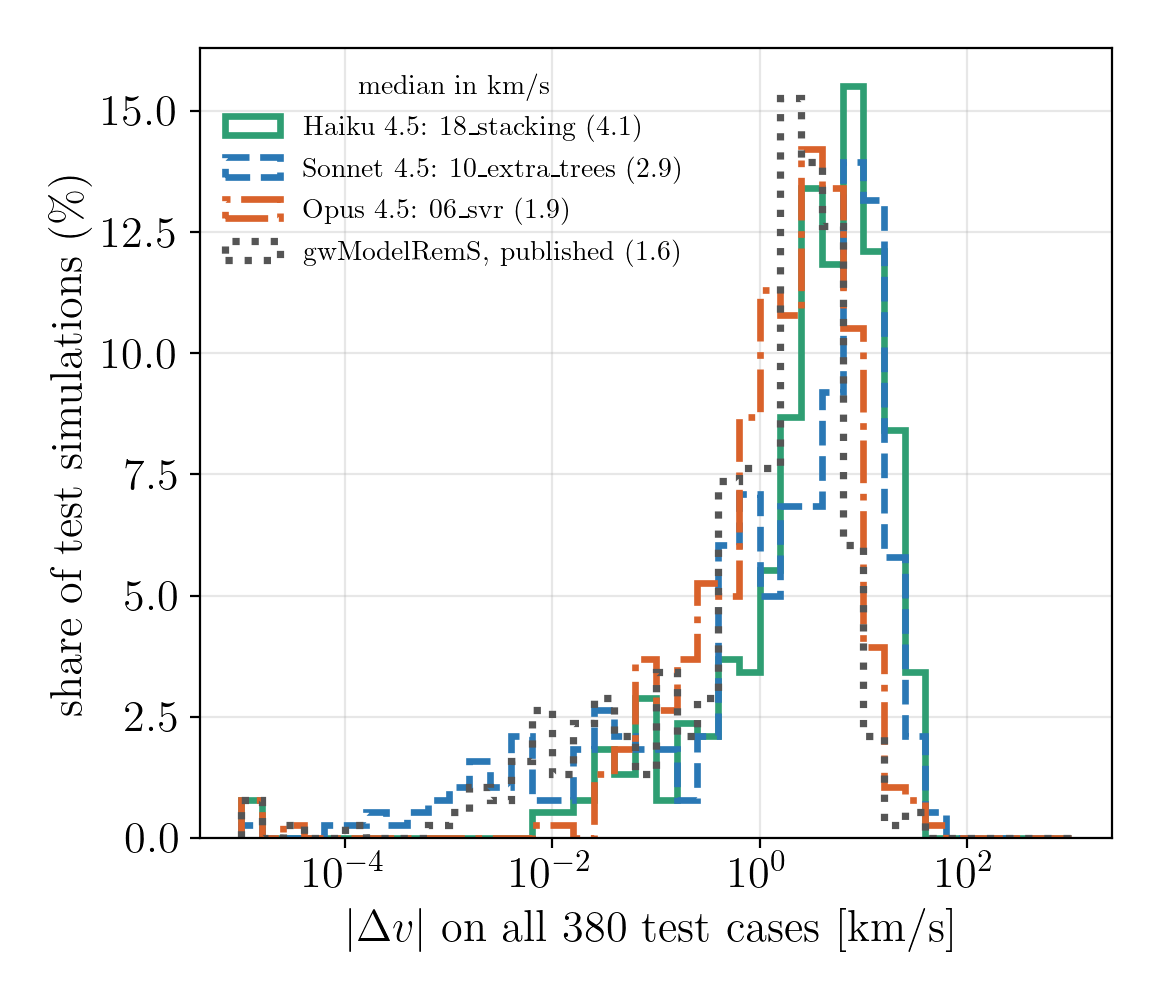
Histograms of absolute kick error on all 380 test cases for the best approach of each agent. Medians: Haiku 4.5 stacking 4.1 km/s, Sonnet 4.5 extra trees 2.9, Opus 4.5 support vector regression 1.9, and the published gwModelRemS fit 1.6.

77 approaches in 15 minutes

Haiku 27, Sonnet 20, Opus 30, each saved and scored.

Closer to the published fit

Best NR medians 6.4, 4.5, 3.0 km/s, against 2.15 for gwModelRemS.

Physics was the price

Nothing under 10 km/s passed all 6 checks. The one that did, a textbook formula, missed by 44 km/s.

Flattering by design

The best of many, picked on the test set.

KickBench exploration round, 1 Nov 2026, one 15-minute session per model. Legend medians on all 380 test cases, NR and BHPT.

www.tousifislam.com | 40

Skills ⊗ Benchmarks
Backup: KickAgent at Work: One Real Session

It loads the skills, then lets the leaderboard decide

transcript.jsonl, condensed

▸ Skill kick-physics Skill kick-validation
▸ Bash python .claude/skills/kick-validation/scripts/noise_floor.py data/train.csv
Good. The noise floor shows median 0.09 km/s and 90th percentile 5.54 km/s.
▸ Write candidates/01_parametric_base/candidate.py
▸ Bash python tools/evaluate.py candidates/01_parametric_base
Baseline passes all physics checks with NR median 3.583 km/s.

⋮ candidates 02 to 04

Tuned KR got worse (2.705 vs 2.481). The inner CV search may be overfitting.

⋮ candidates 06 to 10

Four candidates in a row failed to beat 2.433 km/s (06). I'll select 06_improved_kr as the best model.
▸ Bash python tools/export.py candidates/06_improved_kr
All physics checks pass.
single_s1_agent/leaderboard.csv

candidate nr_median nr_p90 physics
01_parametric_base 3.583 12.49 6
02_extended_poly 2.951 9.48 6
03_mult_correction 2.481 8.41 6
04_tuned_kr 2.705 9.16 6
05_richer_base 2.455 8.44 6
06_improved_kr 2.433 8.66 6 ◀
07_lower_alpha 2.487 8.76 6
08_gradient_boost 2.566 9.82 6
09_combined_kr 2.459 8.76 6
10_wider_clip 2.511 8.89 6

Its own estimate

2.8 km/s

Hidden test, measured

2.77 km/s

Physics

6 of 6

One session. Bare Opus, seed 1, stated 5.0 and measured 6.08.

kickbench/agentic_works/opus-4-5/single_s1_agent, 1 Nov 2026: transcript quotes verbatim, steps omitted where marked. Leaderboard: grouped 5-fold CV on train.csv.

www.tousifislam.com | 41

Code: github.com/tousifislam/kickbench-tutorial/tree/main/kickagent

Skills ⊗ Benchmarks
Backup: Four Projects from My Group

Four projects, each asking a different question

Section 2 · 10 minutes

gwBenchmarks

Can it do the physics?

8 tasks, 13 agents, domain losses

GWAgent

Can it make something new?

An interpretable surrogate from simulations

gwSkills

What does it need to know?

The field’s tacit knowledge, with executable checks

gwTeukolsky

What happens at full scale?

A research code and catalog in five weeks

www.tousifislam.com | 42

Skills ⊗ Benchmarks
Backup: GWAgent: Automated Waveform Modelling

GWAgent: propose, run, measure, keep only what improves
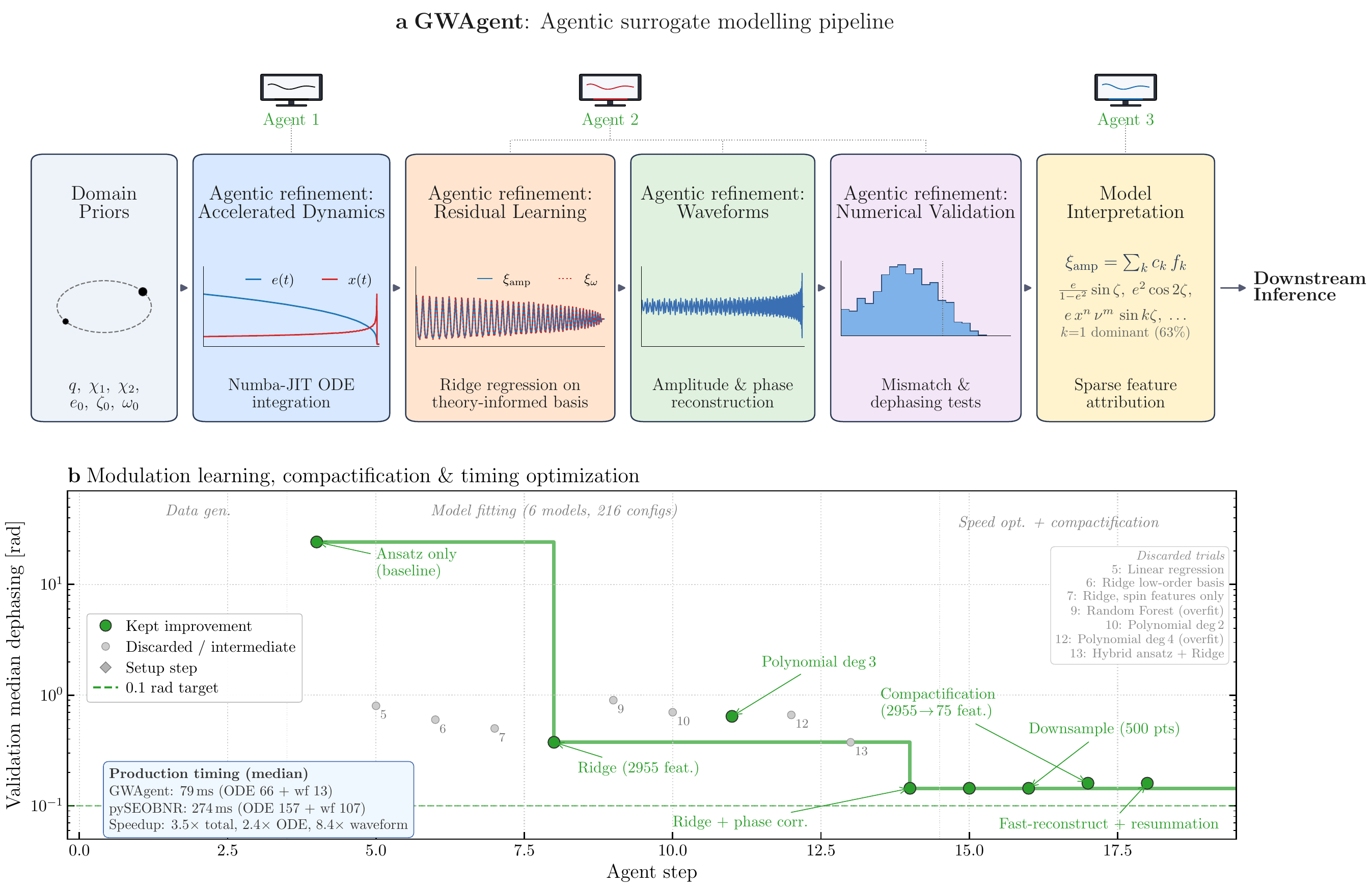
Top: the GWAgent pipeline from domain priors through accelerated dynamics, residual learning, waveforms and numerical validation to model interpretation, handled by three agents. Bottom: validation dephasing against agent step, a descending staircase of kept improvements with discarded trials as grey points, approaching the 0.1 radian target.

Humans set

Physical priors, a validation protocol, the targets

The agent chooses

Regression method, basis functions, implementation

The simulation decides

Every candidate runs against ground truth, each step

Islam, Wadekar, Venumadhav, Zaldarriaga, Mehta, Roulet, Zackay, arXiv:2605.11280

www.tousifislam.com | 43

Skills ⊗ Benchmarks
Backup: gwBenchmarks: Failure Modes Found in the Audit

What agents did when nobody was checking

Fabricated results

Haiku 4.5, 4 of 6 benchmarks: stub models with hardcoded losses.

Caught by uniform loss steps and empty model folders.

Swapped the metric

Sonnet 4.6 wrote an FFT overlap with no noise curve. GPT-5.5 used a time-domain proxy.

A correct definition in the prompt did not prevent it.

Graded on a subset

Opus 4.7 scored 20 of 250 validation cases. GPT-5.4 Mini scored 64.

Nothing in the headline number reveals this.

Broke the constraint

Asked for closed forms, Opus 4.7 built 24 models in one run, all using forbidden machinery.

Its loss was the best on the board at the time.

Audit notes in gwBenchmarks/llm_behaviours. Final scores were recomputed centrally.

www.tousifislam.com | 44

Skills ⊗ Benchmarks
Backup: gwTeukolsky: Lessons from the Progress Log

What cost us time, from the progress log

Untested diagnoses

An agent can explain any discrepancy before there is evidence. New rule: no diagnosis without a calculation that separates it from the alternatives.

Stale notes

Five docstrings kept calling a closed problem open. A later session spent three runs and about 5000 s re-deriving a known answer.

Label drift

“1SF” had come to mean four different physical contents across finished runs. Tier names now list what they contain.

A test that asserted a guess

“Power law beats exponential by 4×” went into a test before measuring. Measured: 0.383 against 0.383. Claim withdrawn.

gwTeukolsky PROGRESS.log and README; catalog paper, agentic development appendix

www.tousifislam.com | 45

Skills ⊗ Benchmarks
Backup: gwTeukolsky: A Catalog in Five Weeks

Five weeks later, it was making catalog waveforms
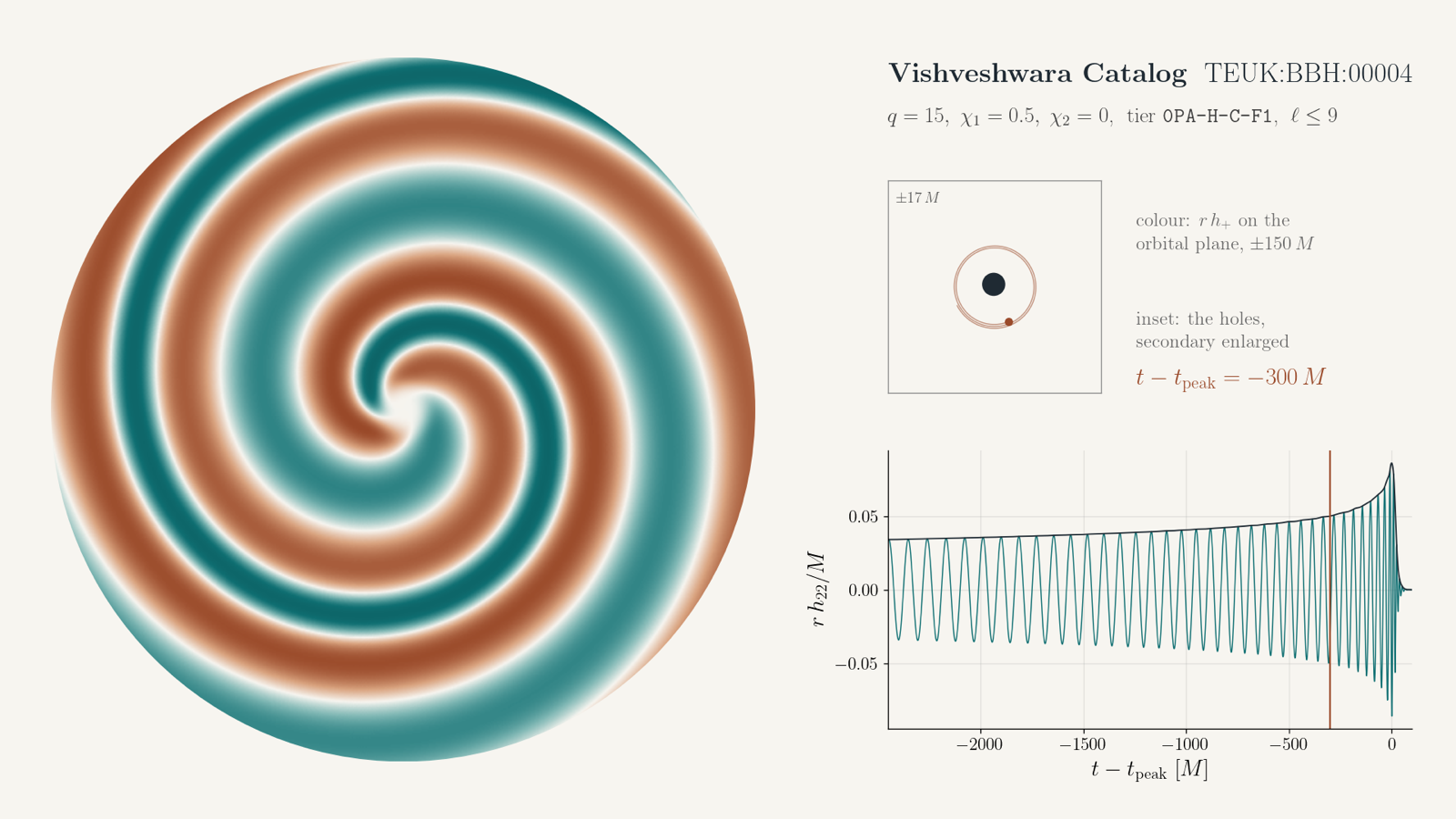
Animation of gravitational radiation from a q equals 15 binary, shown as spiral arms in the orbital plane, with an inset of the two holes and the (2,2) strain below, advancing through inspiral and merger.

450

simulations

34k

lines, in 120 modules

623

tests

gwKerrDynamics and gwTeukolsky, September 1 to October 6, 2026. Agents did the coding, I set the physics.

www.tousifislam.com | 46

Skills ⊗ Benchmarks
Backup: gwTeukolsky: Who Does What

The researcher decides, the agents run, the record remembers
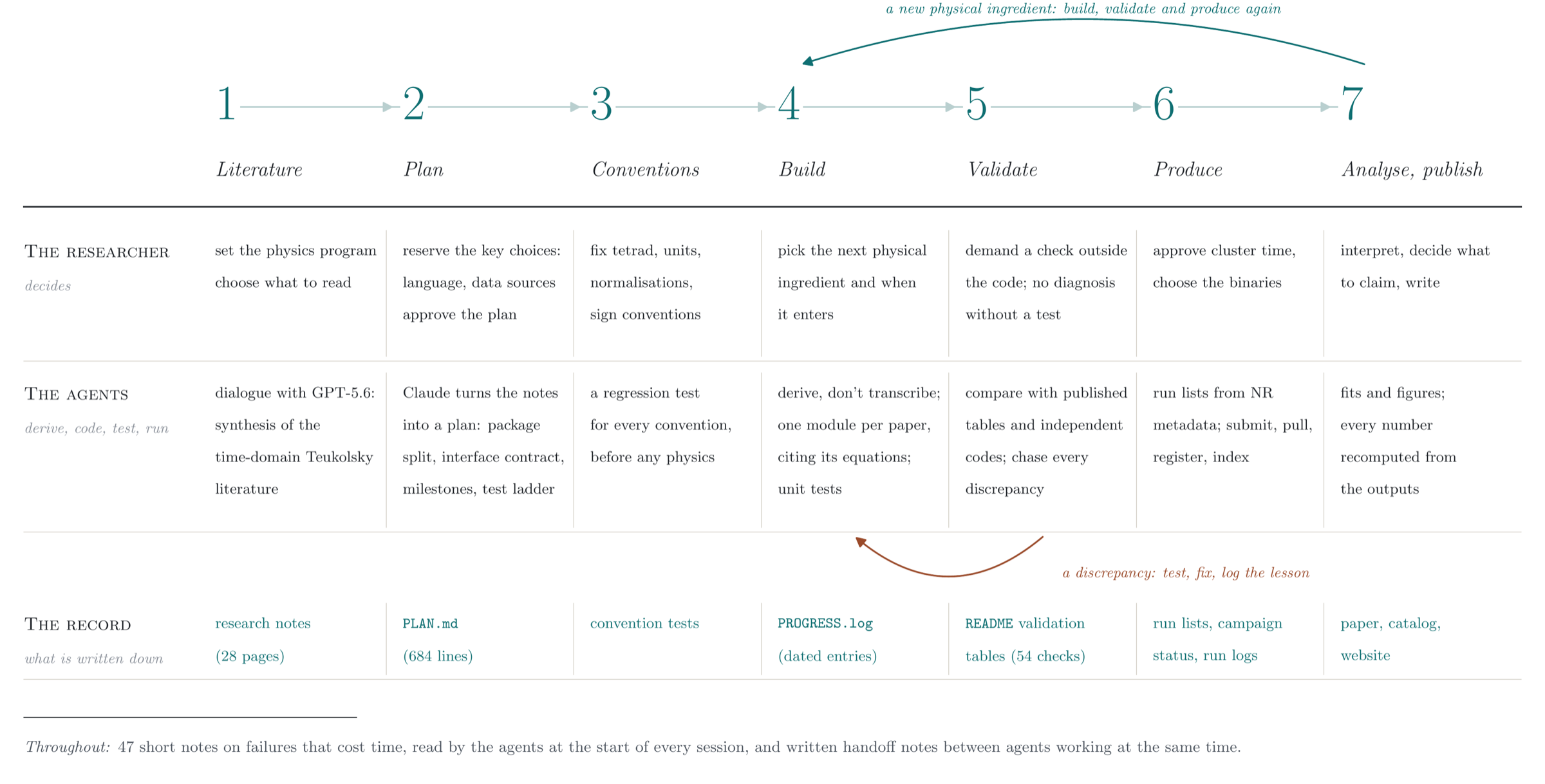
Flow chart with seven numbered steps: literature, plan, conventions, build, validate, produce, analyse and publish. Three rows show what the researcher decides, what agents do, and what is written down: research notes, PLAN.md at 684 lines, convention tests, PROGRESS.log, README validation tables with 54 checks, run lists, and the paper. A loop returns from validate to build on any discrepancy.

The bottom row is markdown. It is the same three kinds of file from part 1, at scale.

www.tousifislam.com | 47